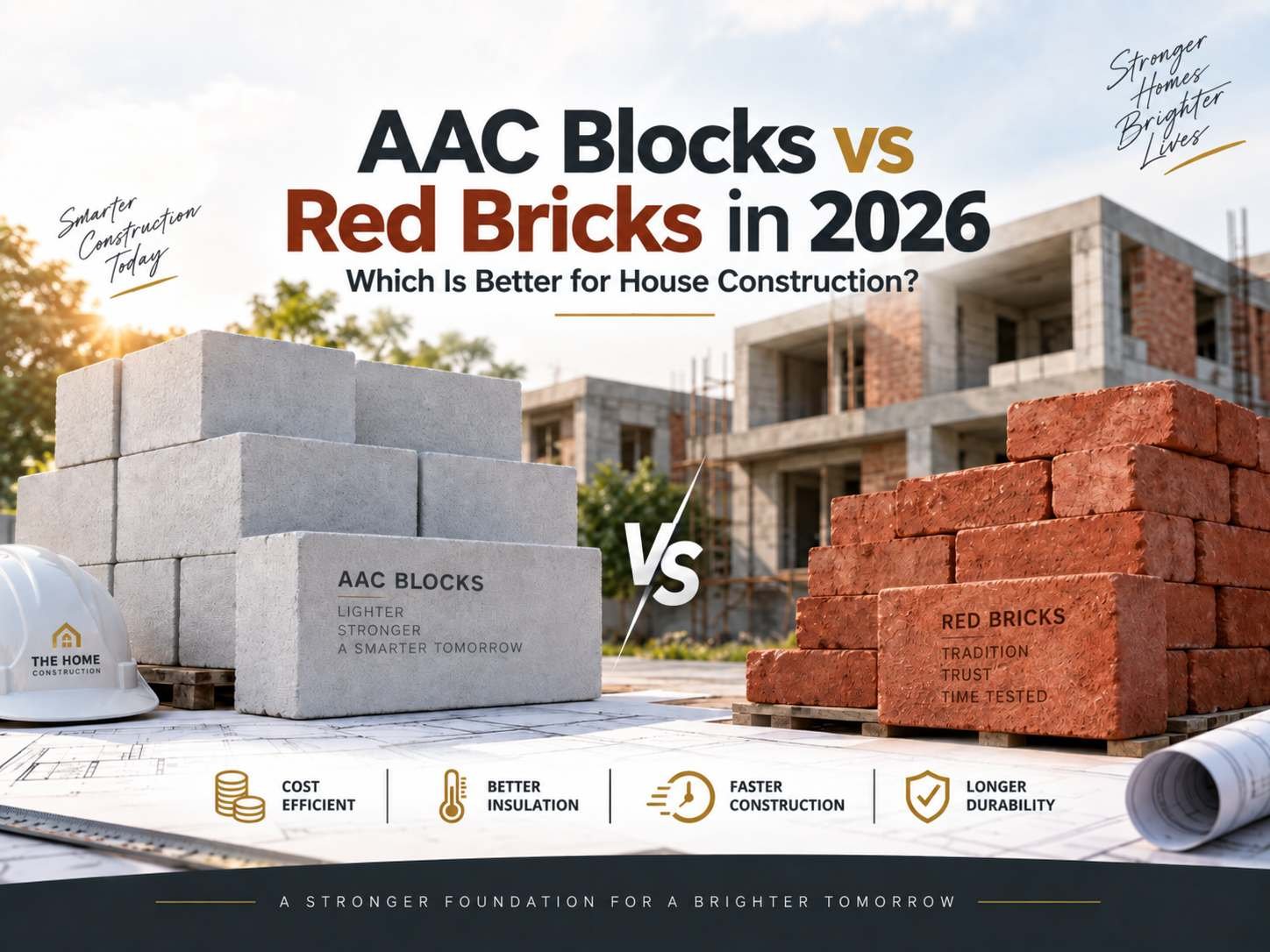
AAC blocks vs red bricks is one of the biggest material decisions for anyone building a home in 2026. Both can work well, but choosing only by the price of one block or one brick can give you the wrong answer.
The better choice depends on wall weight, heat, construction speed, local labour, waterproofing, fixing requirements and the total finished-wall cost.
This practical guide helps homeowners compare both options before masonry work starts.
Quick Verdict
AAC blocks are often better when you want lighter walls, faster masonry and better thermal comfort. Red bricks remain a strong choice where skilled AAC labour is unavailable, heavy wall fixings are common, or traditional masonry workmanship is more reliable. Your structural engineer and site conditions should decide the final specification.
AAC Blocks vs Red Bricks: What Changes on Site?
AAC blocks are larger and much lighter for the wall area they cover. Fewer joints can speed up masonry and reduce mortar consumption. Their cellular structure also provides good thermal insulation, which can help reduce heat transfer through external walls.
Red bricks are smaller, familiar to most masons and easy to source in many locations. They are commonly preferred where homeowners expect frequent drilling, heavy wall-mounted items or where local teams have more experience with brick masonry.
AAC Blocks vs Red Bricks Cost: 5 Factors to Compare
Compare block or brick cost together with adhesive/mortar, labour, plaster thickness, wastage and transport. A cheaper unit does not always mean a cheaper finished wall.
AAC units cover more wall area per piece, so an experienced team can complete masonry faster. Poor alignment, however, can cancel this advantage.
AAC generally offers better thermal insulation than conventional red brick. This matters especially for exposed external walls and upper floors in hot Indian climates.
Neither material should be treated as “waterproof.” External plaster, joints, sill details, terrace edges and wet-area waterproofing still need correct execution. AAC also needs the right adhesive, mesh/detailing where specified and proper surface preparation.
For TVs, cabinets, geysers or heavy shelves, use anchors suitable for the wall material and load. Do not assume the same fastener works equally well in AAC and red brick.
Which One Should You Choose?
Consider AAC blocks if: you are planning a multi-storey home, want lower wall dead load, faster masonry and improved thermal performance, and have a contractor experienced with AAC installation.
Consider red bricks if: good-quality bricks are easily available locally, your masonry team is more reliable with conventional brickwork, or the project has many heavy wall-fixing requirements.
Before accepting any masonry delivery, use our construction material quality checklist to check what arrives on site.
3 Mistakes to Avoid
- Choosing only from the per-piece price.
- Using labour that has never worked with the selected wall system.
- Ignoring plaster, waterproofing, anchors and service-chasing details until after masonry is complete.
Quick FAQs
Are AAC blocks cheaper than red bricks?
Not always. Compare the complete finished-wall cost: material, mortar or adhesive, labour, plaster, transport and wastage.
Which is stronger: AAC block or red brick?
Strength depends on product grade and application. In an RCC-framed home, masonry is usually infill; use the wall material and grade specified by your engineer.
Are AAC blocks waterproof?
No. Good external finishing, joint treatment and waterproofing details are still necessary wherever walls are exposed to moisture.
Final Answer
There is no universal winner in the AAC blocks vs red bricks debate. For many modern homes, AAC can offer a strong combination of lower wall weight, speed and thermal comfort. Red brick can still be the more practical option where workmanship, availability and fixing needs favour conventional masonry.
The best material is the one that fits your structural design, climate, site team and complete budget—not the one that looks cheapest at the supplier.
If you are still deciding how much responsibility you want the contractor to handle, compare turnkey construction vs labour contract before finalising your building agreement.
Planning Your Home Construction?
Get a clear construction scope, material specification and stage-wise execution plan before work starts.
WhatsApp: +91 84488 02364