
A home construction budget can look perfectly planned on paper and still go off track once work starts on site. The reason is often not one big mistake, but several small expenses that were never discussed clearly before construction began.
For plot owners, these hidden costs can appear during excavation, material handling, water arrangements, rework, or last-minute changes. By the time they are noticed, the homeowner may already be committed to the project.
The safest approach is to identify these cost risks before signing the construction agreement and make sure responsibility for each item is clearly written.
This guide covers five common hidden construction costs and explains how a transparent turnkey contract can reduce surprises.
Table of Contents
- Why Hidden Costs Appear During Home Construction
- Hidden Cost 1: Material Wastage and Poor Storage
- Hidden Cost 2: Water, Electricity, and Site Utilities
- Hidden Cost 3: Transport, Loading, and Unloading
- Hidden Cost 4: Rework Due to Poor Coordination
- Hidden Cost 5: Extra Work and Scope Changes
- How a Turnkey Contract Should Cover These Costs
- Homeowner Checklist Before Signing
- Conclusion
Why Hidden Costs Appear During Home Construction
Many quotations focus on a rate per square foot, but a single rate does not explain every responsibility involved in building a house.
If the agreement does not define site utilities, material handling, storage, wastage, specialist work, or extra-work approval, these items can become additional charges later.
Hidden Cost 1: Material Wastage and Poor Storage
Cement, steel, bricks, sand, aggregate, tiles, and finishing materials can all lose value if they are ordered incorrectly or stored badly.
Common Examples
- Cement bags absorb moisture because they are stored directly on the floor.
- Bricks break during repeated shifting or careless unloading.
- Steel is cut inefficiently, creating avoidable scrap.
- Tiles or sanitary items are damaged because they are stored in active work areas.
- Too much material is ordered before it is actually required.
Individually these losses may look small, but across an entire house they can become a meaningful part of the final budget.
How to Reduce the Risk
- Use stage-wise material planning.
- Keep cement on a raised, dry platform.
- Separate finished materials from heavy civil work zones.
- Track high-value materials when they arrive on site.
- Clarify who bears normal and abnormal wastage in the agreement.
Hidden Cost 2: Water, Electricity, and Site Utilities
Construction needs a regular water supply for concrete work, brickwork, plastering, and curing. Electricity may also be needed for tools, lighting, pumps, and site equipment.
These costs are often ignored during early budgeting because they do not appear as visible parts of the finished home.
Questions to Ask Before Work Starts
- Who will arrange construction water?
- Is tanker water included if local supply is unavailable?
- Who pays temporary electricity charges?
- Who provides water-storage tanks, pumps, or temporary connections?
- Is curing labour included in the quoted scope?
These details are especially important for empty plots where no utility connection exists yet.
Hidden Cost 3: Transport, Loading, and Unloading
Material price and delivered material cost are not always the same thing.
Steel, cement, bricks, sand, stone, doors, windows, and finishing materials may involve transport, loading, unloading, crane use, or manual shifting inside the site.
| Cost Area | What Can Go Wrong | What to Confirm |
|---|---|---|
| Transport | Supplier quote excludes delivery | Whether delivery is included |
| Unloading | Extra labour is charged at site | Who pays unloading labour |
| Internal Shifting | Material must be moved repeatedly | Whether internal handling is included |
Mobile tip: Swipe left-right to view the full table.
Hidden Cost 4: Rework Due to Poor Coordination
Rework is one of the most frustrating hidden costs because the homeowner may end up paying to break and rebuild work that was already completed.
This often happens when civil, plumbing, electrical, and finishing teams do not coordinate before execution.
Typical Rework Situations
- A wall is plastered before an electrical conduit is finalized.
- A slab opening is missed for plumbing or service lines.
- A bathroom slope is incorrect and tiles need to be removed.
- A door opening does not match the approved drawing.
- Waterproofing is damaged by later work.
Good planning before each stage is usually cheaper than repairing mistakes afterward.
Hidden Cost 5: Extra Work and Scope Changes
Construction naturally involves decisions, but every change can affect cost and timeline.
The problem is not the change itself. The problem is starting extra work before the homeowner understands the revised price.
Examples of Scope Changes
- Adding a bathroom or changing room sizes
- Changing flooring after procurement
- Upgrading doors, windows, sanitaryware, or electrical fittings
- Adding extra elevation features
- Changing staircase details after structural work begins
A strong agreement should include a simple variation process: describe the change, confirm the additional amount, approve it in writing, and only then execute the work.
How a Turnkey Contract Should Cover These Costs
A turnkey contract is useful only when the scope is detailed enough to reduce ambiguity.
The Contract Should Clearly State
- Material brands, grades, or approved equivalents
- Who procures and stores materials
- Normal material handling responsibility
- Water and electricity arrangements
- Transport and unloading responsibility
- Plumbing, electrical, waterproofing, and finishing scope
- Items specifically excluded from the quotation
- How extra work will be priced and approved
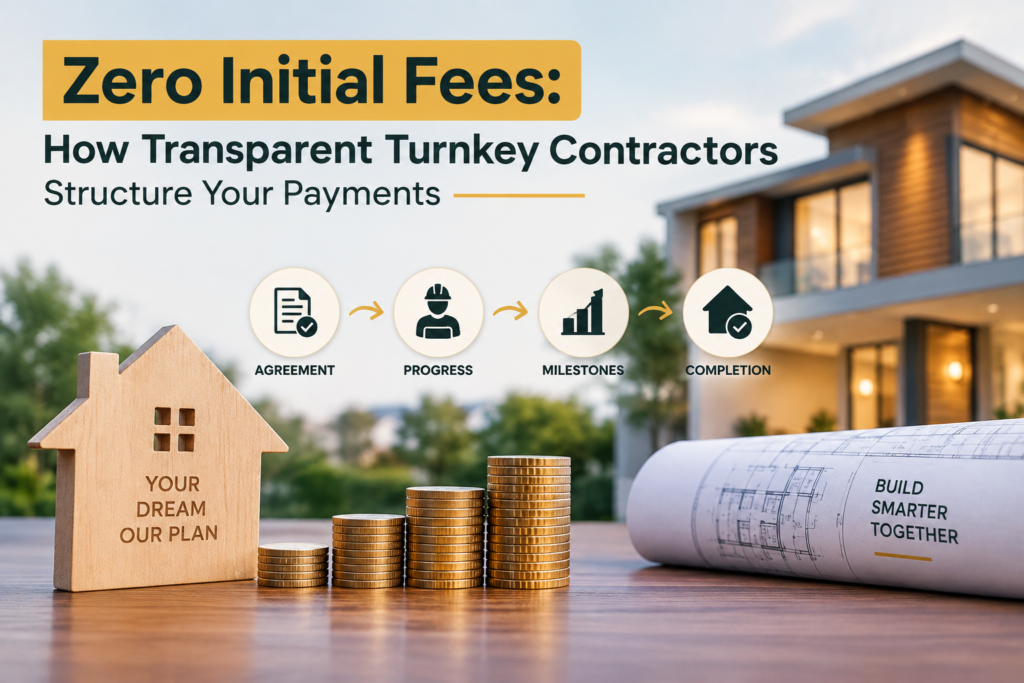
- Payment milestones linked to construction progress
Homeowner Checklist Before Signing
- Ask for a written scope, not only a per-square-foot rate.
- Check what is included and excluded.
- Confirm site utility responsibility.
- Ask how material wastage is handled.
- Confirm delivery and unloading charges.
- Understand the extra-work approval process.
- Link payments to measurable milestones.
- Keep all major changes documented.
Conclusion
Hidden construction costs become dangerous when they are discovered after the project has already started. Most of them can be reduced with better planning and clearer documentation.
- Plan materials carefully to reduce wastage.
- Define water, electricity, transport, and unloading responsibilities.
- Coordinate services before plastering and finishing.
- Approve extra work and cost before execution.
Planning to Build Your Home?
Share your plot size, location, and required number of floors with The Home Construction team for a transparent, stage-wise construction quotation.
WhatsApp: +91 84488 02364