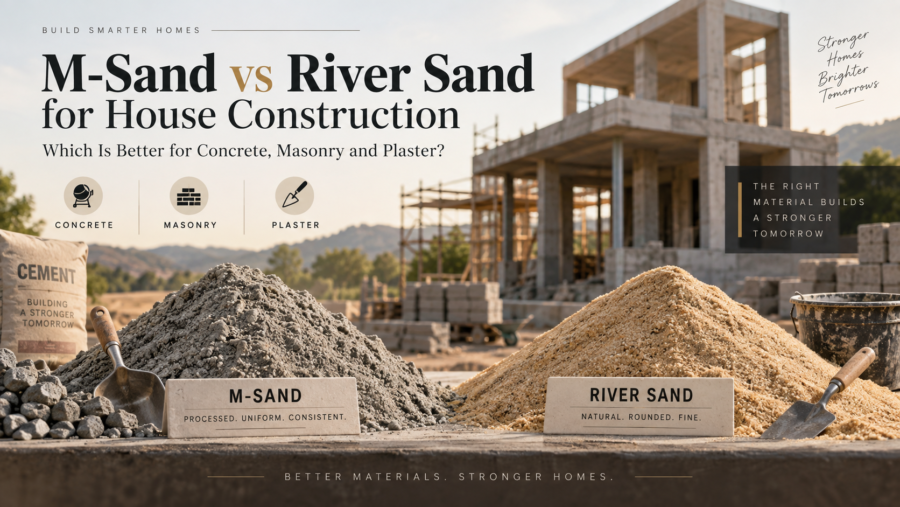
Sand looks simple, but poor grading, excess fines or contamination can affect mortar, plaster and concrete. The M-sand vs river sand decision should be based on quality and application—not only on which one is cheaper locally.
What Is M-Sand?
Manufactured sand is produced by crushing suitable rock and processing it to achieve required particle sizes. Good M-sand can offer controlled grading and consistent supply, but quality depends heavily on the source and processing plant.
What Is River Sand?
River sand is naturally weathered sand sourced from river deposits where legally permitted. Its rounded particles can give good workability, but grading, silt content and source quality can vary significantly.
Which Is Better for Concrete?
Either can work when it meets the approved grading and cleanliness requirements and is used in a properly designed concrete mix. Concrete quality depends on the complete mix—cement, aggregate, sand, water, admixture, batching and curing.
Which Is Better for Plaster?
Plaster requires suitable fine grading and workability. Some suppliers sell dedicated plaster sand because very coarse concrete-grade M-sand can produce a rough finish. Do not assume one sand type fits every task.
7 Checks Before Accepting Sand
- Confirm intended use: concrete, masonry or plaster.
- Check approved source and specification.
- Look for clay, roots, organic waste or debris.
- Keep stockpiles separate from soil.
- Protect from drain water and site contamination.
- Account for moisture when batching.
- Do not change sand source mid-work without quality review.
Cost: Do Not Compare Only Per Ton
Compare delivered cost, wastage, required cement/mortar performance, screening/washing needs and consistency. A slightly cheaper contaminated sand can create higher finishing and repair costs.
Final Answer
M-sand can provide controlled grading when produced properly, while good-quality river sand can offer useful workability. Neither is automatically superior. Choose sand by grading, cleanliness, intended use and approved project specification.
Planning Your Home Construction?
Get a clear construction scope, material specification and stage-wise execution plan before work starts.
WhatsApp: +91 84488 02364