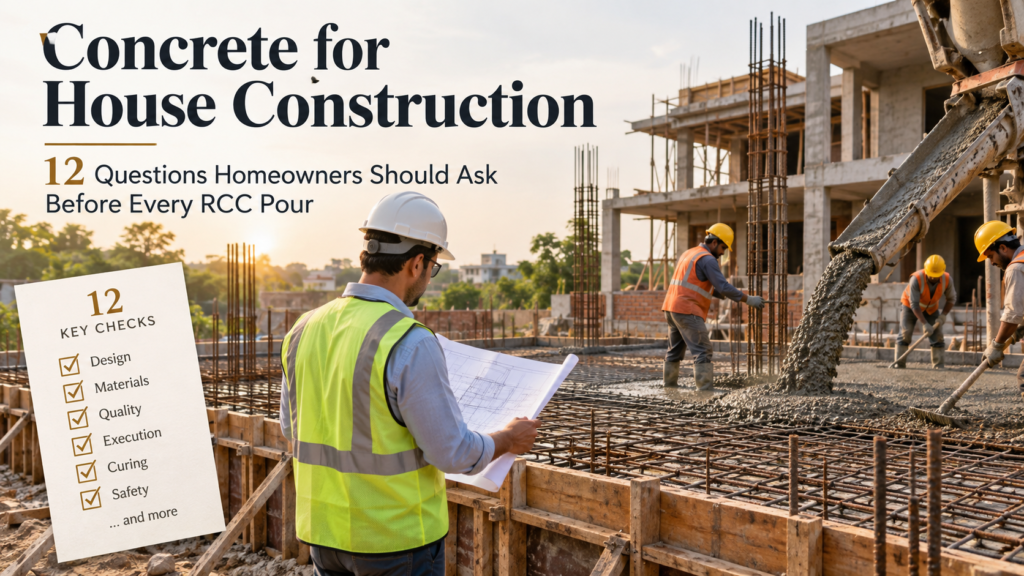

A strong home is not created by one premium material. Long-term performance comes from planning, structural design, workmanship, waterproofing, curing and quality checks at every hidden stage.
These 10 home construction tips focus on the areas homeowners should verify before finishes hide the work.
1. Start With Site and Soil Understanding
Do not finalise foundation assumptions from neighbouring houses. Site levels, soil condition and building loads should guide the structural design.
2. Freeze Drawings Before Construction
Architectural, structural, plumbing and electrical drawings should be coordinated before major work begins. Late changes create breaking and rework.
3. Write Material Specifications
Specify cement type, reinforcement grade, masonry material, waterproofing system, plumbing/electrical standards and finish allowances in writing.
4. Inspect Reinforcement Before Concrete
Bar size, spacing, laps, cover, shuttering and embedded sleeves should be checked before every structural pour.
5. Control Concrete and Curing
Correct batching, water control, compaction and curing are more important than simply buying an expensive cement brand.
6. Protect the Building From Water
Plan waterproofing for bathrooms, terraces, balconies, tanks, external joints and plinth/ground-contact areas. Test critical zones before tiling or final finishes.
7. Plan Plumbing and Electrical Routes Early
Confirm pipe routes, floor traps, AC drains, electrical points and sleeves before plastering so finished walls do not need to be broken later.
8. Use the Right Material for the Right Area
Anti-skid tile in wet areas, suitable anchors for block walls, correct board grade for kitchens and weather-appropriate exterior finishes all reduce future repairs.
9. Do Not Rush Finishing Work
Allow wet work to cure and dry adequately before putty, paint, woodwork and final finishes. Protect completed flooring and fixtures from ongoing construction.
10. Keep Records
Photograph concealed services, keep test reports, warranties, approved drawings and material records. These become extremely useful during maintenance and future renovation.
Final Answer
A long-lasting home depends on dozens of small decisions being executed correctly. Focus on approved design, quality control, water protection, curing, service coordination and documentation. Beautiful finishes can be replaced; hidden structural and waterproofing mistakes are far more expensive.
Planning Your Home Construction?
Get a clear construction scope, material specification and stage-wise execution plan before work starts.
WhatsApp: +91 84488 02364